Moroccan Fish Tagine: Vessel, Chermoula and Cooking Method
Learn how Moroccan fish tagine combines a covered vessel, chermoula-seasoned fish, vegetables and gentle cooking, and how it differs from grilling.
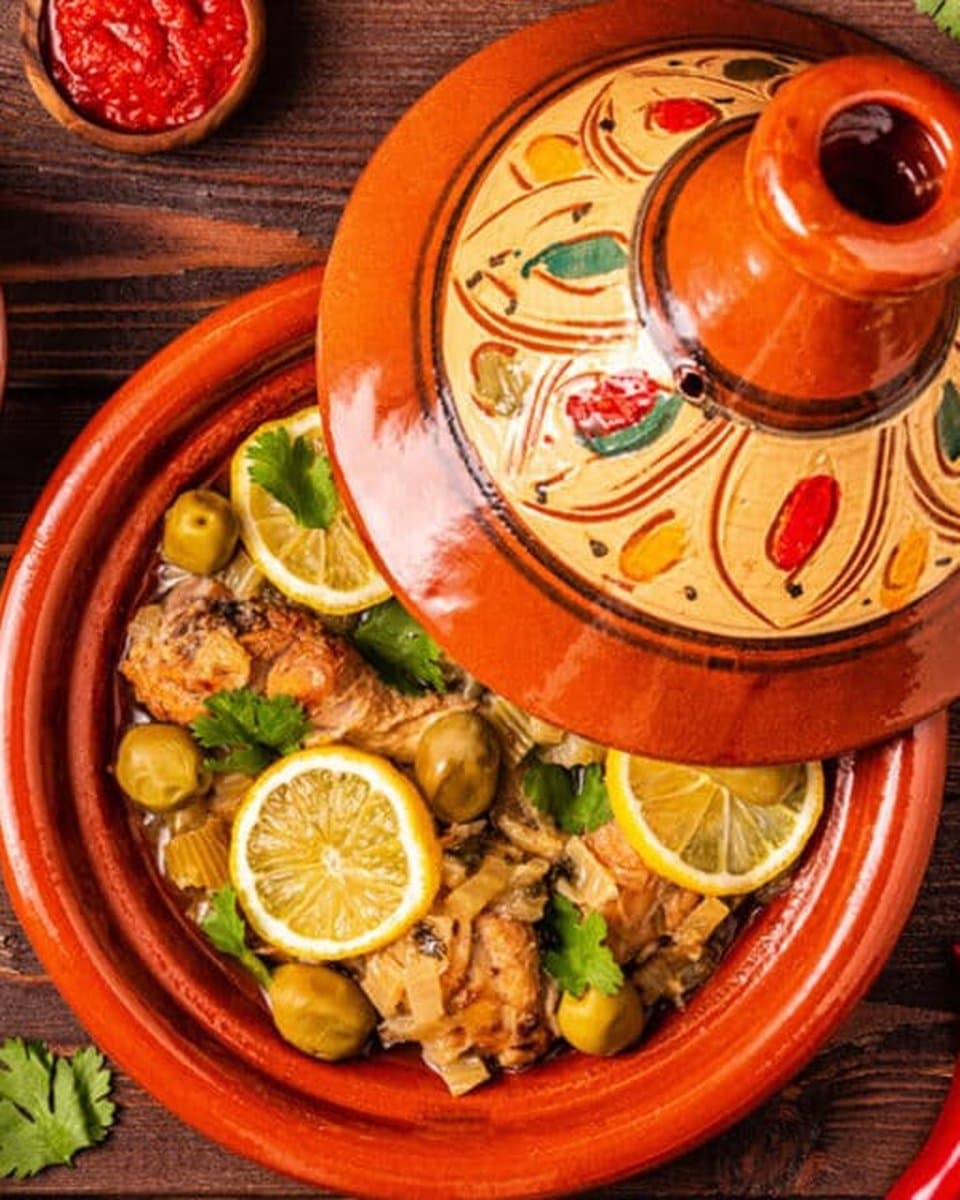
“Tagine” names two connected things: a cooking vessel and the dish made in it. The traditional vessel has a broad, shallow base and a tall conical lid. Ingredients cook together under that cover, making fish tagine a composed dish rather than simply a piece of fish with sauce added afterward.
Moroccan fish tagine often brings together fish, chermoula, vegetables, and enough liquid or natural moisture for gentle cooking. That broad description is useful, but it is not one fixed recipe. Fish species, vegetables, chermoula balance, garnishes, and cooking times vary by region and cook.
The tagine vessel and the finished dish
The base of a tagine holds the ingredients in layers, while the lid covers them during cooking. The form supports a moist cooking environment: vegetables, seasoning, oil, and a modest amount of liquid cook together as the dish gradually heats.
The Moroccan National Tourist Office describes tagine as both a sought-after Moroccan dish and a particular method with many versions. It notes fish, chicken, meat, vegetables, and other ingredients among the possibilities. That variety is why “fish tagine” tells you the category but not every detail of the plate.
In everyday English, a restaurant may call the finished dish a tagine whether it reaches the table in traditional earthenware or another serving vessel. If the presentation matters to you, ask rather than treating cookware as proof of a particular recipe.
Chermoula: the seasoning at the centre
Chermoula is a Moroccan herb-and-spice preparation strongly associated with fish. A common profile combines:
- fresh herbs such as coriander or parsley;
- garlic;
- cumin;
- paprika;
- oil;
- lemon juice.
Salt and other spices may be included, and the balance can move from bright and herbal to deeper and more spiced. Some versions are used as a marinade; some also season the vegetables or cooking liquid.
These are common examples, not Plage Bleue’s declared ingredients. Recipes vary, and diners with allergies or restrictions should ask the restaurant about the actual preparation.
A detailed Taste of Maroc fish tagine recipe offers one concrete model: fish marinated in chermoula, layered with vegetables, and slowly braised. It is useful as an example of technique, not a universal specification for Moroccan fish tagine.
Vegetables, olives, and preserved lemon
Fish is only one part of many tagines. Common vegetable examples include:
- potatoes;
- carrots;
- tomatoes;
- peppers;
- onions.
Olives, fresh lemon, or preserved lemon may also appear. Preserved lemon contributes an intense salty-citrus character, while olives bring their own salinity. Not every recipe uses either, and quantities matter.
The Taste of Maroc example layers onion, carrot, potato, tomato, and pepper, with olives and preserved lemon presented as options. Another cook may choose a different base, omit one vegetable, change the arrangement, or adjust the chermoula. Seasonal produce and household preference can reshape the dish without making one version the sole standard.
How gentle cooking changes the result
A layered process
A common method begins by seasoning or marinating the fish with chermoula. Vegetables are arranged in the tagine base so that ingredients that need more cooking time can begin softening. Fish is positioned with the remaining seasoning and garnishes, then the vessel is covered.
The tagine is brought gradually to a simmer rather than exposed to an immediate blast of heat. Vegetables soften, their liquids mingle with chermoula and oil, and the fish cooks within that moist environment. The exact timing must suit the fish cut and vegetable size; a thick fish portion and a small thin fillet do not behave identically.
Why “slow” needs context
Tagine cooking is often described as slow, but fish itself can cook quickly. Some recipes partly cook the vegetables before adding thinner or smaller fish. The goal is not to cook every fish for the same long period. It is to coordinate the layers so the vegetables become tender without drying the fish.
This is one reason a recipe can teach the method without defining every restaurant version. The vessel, cut, heat source, fish thickness, and vegetables all affect timing.
Fish tagine versus grilled fish
The clearest difference is the cooking environment.
Fish tagine
- cooks under cover with moisture;
- brings fish, seasoning, vegetables, and cooking juices together;
- commonly uses chermoula across more than one component;
- creates a spoonable or bread-friendly sauce around the ingredients;
- is served as a composed Moroccan dish.
Grilled fish
- meets more direct heat;
- develops a grilled exterior;
- usually keeps the fish itself as the visual and structural centre;
- may have sides or sauce, but they are not necessarily cooked together with it.
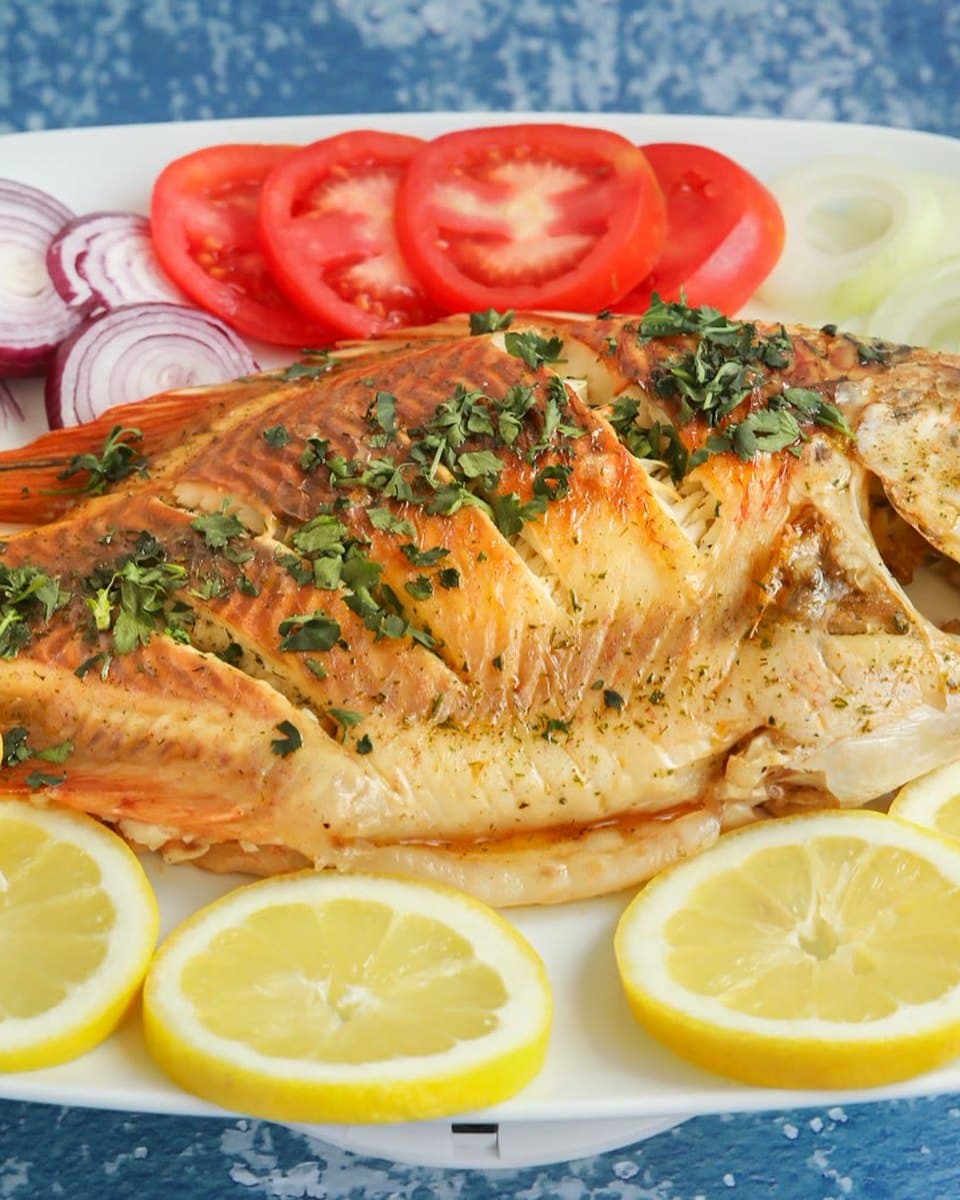
Neither method is inherently better. Choose grilled fish when direct heat and the fish’s surface are the priority. Choose tagine when you want fish integrated with chermoula, vegetables, and cooking juices. The fresh fish guide covers species, format, and availability questions, while the seafood guide compares more preparations.
What to expect when ordering
Ask which fish is used, particularly when a menu says only “fish tagine.” A firm piece may hold together differently from a delicate fillet. Then ask which vegetables and garnishes are included.
Useful questions include:
- Which fish is in this tagine?
- Does the chermoula contain the herbs, spices, garlic, or citrus I need to know about?
- Which vegetables, olives, or preserved lemon are included?
- Is it an individual portion or suitable for sharing?
- Can staff advise on the allergies or dietary restrictions I have stated?
Do not assume all seafood tagines share the same base. A fish tagine, mixed seafood tagine, octopus tagine, and shrimp tagine may be separate dishes with different preparation details.
Fish tagine within a Moroccan meal
Fish tagine can follow salads or stand as the main shared focus, depending on portion size. Bread may be useful with the cooking juices, but serving customs vary by venue. If several dishes are being ordered, ask about quantity before adding multiple starters.
The broader Moroccan tagine guide compares fish with chicken, lamb, kefta, monkfish, seafood, octopus, and shrimp menu choices. For the cultural and dining context around other dishes, continue to traditional Moroccan food in Agadir.
Plage Bleue’s current menu lists fish and other seafood tagines but does not publish their full ingredient recipes. The chermoula and vegetable examples above therefore describe Moroccan culinary practice and the cited recipe, not a claim about the restaurant’s exact preparation. Review the setting on the experience page and use contact for current ingredient or reservation questions.
Understanding the method makes the dish easier to choose: tagine combines vessel, seasoning, layers, and gentle heat. Grilled fish highlights direct heat; fish tagine highlights how the fish and its surrounding ingredients cook together.
Questions fréquentes
What is a Moroccan fish tagine?
It is a fish dish gently cooked with seasoning and other ingredients in the tagine style; the word tagine also names the shallow earthenware vessel with a conical lid.
What is chermoula?
Chermoula is a Moroccan herb-and-spice preparation commonly built from fresh herbs, garlic, cumin, paprika, oil, and lemon, although recipes vary.
Which vegetables are used in fish tagine?
Examples can include potatoes, carrots, tomatoes, peppers, and onions, with olives or preserved lemon in some recipes. These are variable examples, not a fixed formula.
How is fish tagine different from grilled fish?
Tagine cooking gently cooks fish with moisture, seasoning, and accompanying ingredients under cover, while grilling applies more direct heat and keeps the fish itself at the centre of the plate.
Related articles
Moroccan Tagine Guide: How to Choose from the Menu
Compare chicken, lamb, kefta, fish and seafood tagines with a practical guide to ingredients, prices, portions and ordering questions.
Traditional Moroccan Dishes to Explore in Agadir
Explore Moroccan breakfast, salads and tagines available in Agadir, with practical guidance for choosing chicken, lamb, kefta, fish or seafood.
Seafood in Agadir: A Clear Guide to Choosing Your Meal
Understand seafood menus in Agadir, compare fried, grilled, plancha, salt-baked and tagine dishes, and know what to ask before ordering.